
Guide
FOR YOUR PRACTICE · 13 MIN READ
THE HABITAT LIST: WHAT TO DESIGN IN, AND WHAT TO DESIGN OUT
A 10-star home can still clear every bit of habitat on its site. The things I'd want on every project, from the outdoor lighting to what goes in the garden beds, and how to get a client to say yes.
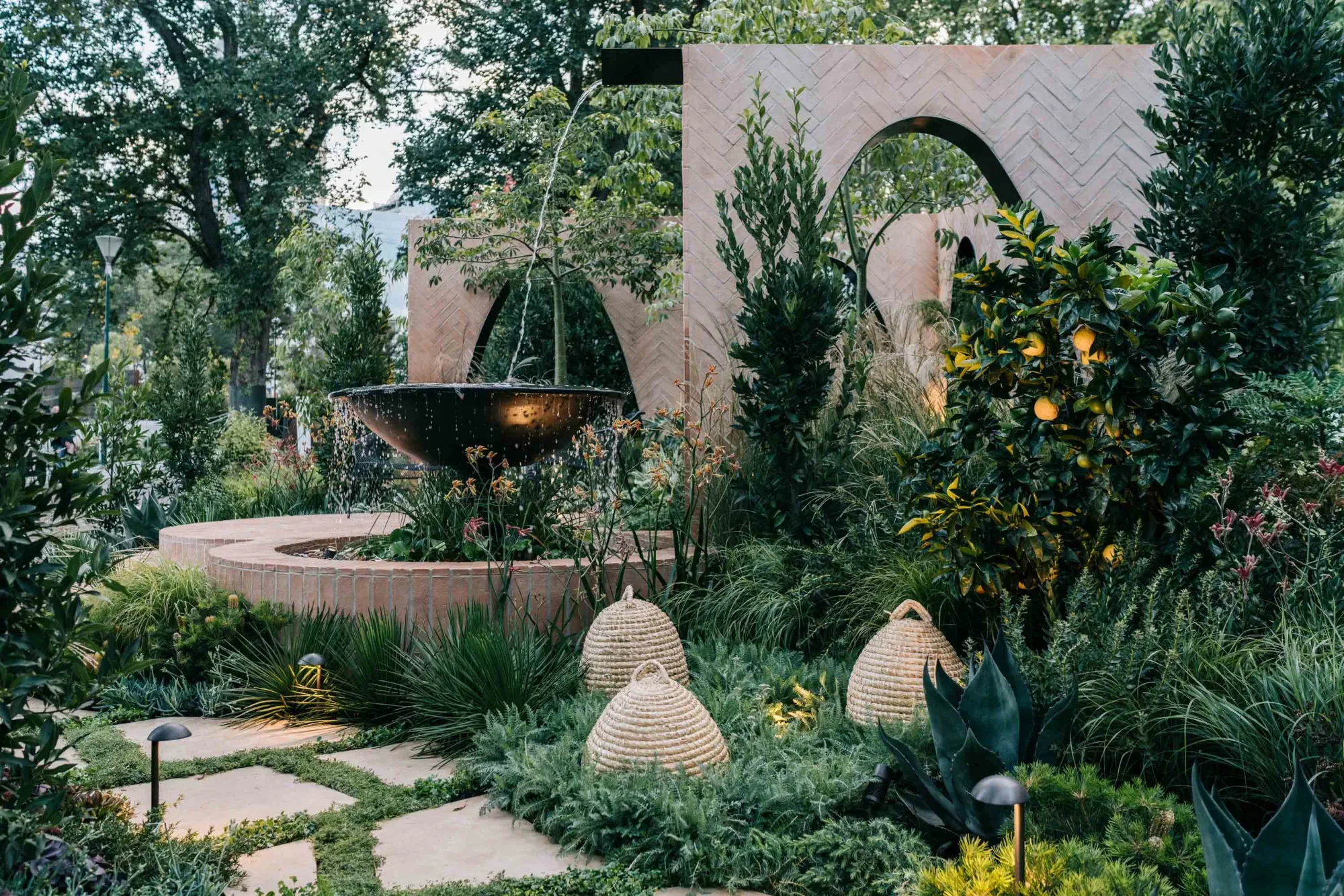
You can build a 10-star home, or a certified Passivhaus, and still clear every bit of habitat on the site.
That isn't a loophole, it's just what we measure. NatHERS (the Nationwide House Energy Rating Scheme) and the energy provisions in the National Construction Code assess how a building performs, and neither of them asks what was living on the site before the excavator turned up. Unless a planning overlay or an environmental law gets triggered, there's usually no requirement for habitat at all. Carbon took about a decade to become a normal conversation in this industry, and most people can hold their own on operational and embodied carbon now. Ask what the last project did for the wildlife on the site however, and you'll usually get a pause and a startled look.
I spent my first career as an environmental scientist, studying how construction affects ecosystems, before I ever picked up a camera (and before that my university honours project was on STDs in birds – it turns out lyrebirds can get chlamydia). So this is where my two careers overlap, and for the last few years I've been turning the science into things you can actually put on a drawing. This is the short version.
The framework I use is Biodiversity Sensitive Urban Design (BSUD), developed by Georgia Garrard, Sarah Bekessy and their colleagues at RMIT University and the University of Melbourne (Garrard et al., 2017). It comes down to five principles: keep and add habitat, let wildlife move between patches, cut the threats, let natural processes run, and give people a reason to notice any of it is there. Most of what follows sits under one of those five.
If you'd like to know where your practice sits before you read on, the Your biodiversity baseline takes about five minutes.
01 Why it's about to matter
Right now most Australian projects have no legal requirement to make room for wildlife, but that's starting to change.
In England, development has had to deliver at least a 10% net gain in biodiversity since 2024, which means nature has to end up measurably better off than it was before, either on the site or by paying for habitat somewhere else. Sites under 0.2 hectares have been exempt since August 2026, but the rule still covers most larger projects.
Closer to home, Green Star Buildings v1.1 (the Green Building Council of Australia's rating tool) has a Nature Positive Pathway. From 2028, projects going for a 5 or 6 Star rating will need to show a 10% net gain in biodiversity (or no net loss on a greenfield site). And the reforms to the Environment Protection and Biodiversity Conservation (EPBC) Act that passed in late 2025 swapped "no net loss" for a net gain test on environmental offsets, although that only applies to projects likely to significantly affect something protected at a national level, like a threatened species, and a residential or commercial project rarely does.
So if you start now, and designing for wildlife is already normal in your practice by the time those requirements reach more Australian projects, you'll be ahead instead of scrambling to catch up.
02 Biophilic design is a different thing
Biophilic design focuses on the human experience of nature – views, greenery, natural materials, daylight. That all definitely matters, and it’s worth doing. Designing for biodiversity asks a different question however, which is whether the building makes room for something that isn't just humans. Has the space also been designed so that wildlife can feed, nest, shelter and move through it?
Both can happen in the same garden bed. If the planting outside the kitchen window is chosen to feed pollinators as well as to look good, then something else gets to live there too. Same footprint, same budget, same benefit to people, but a wildly different outcome.
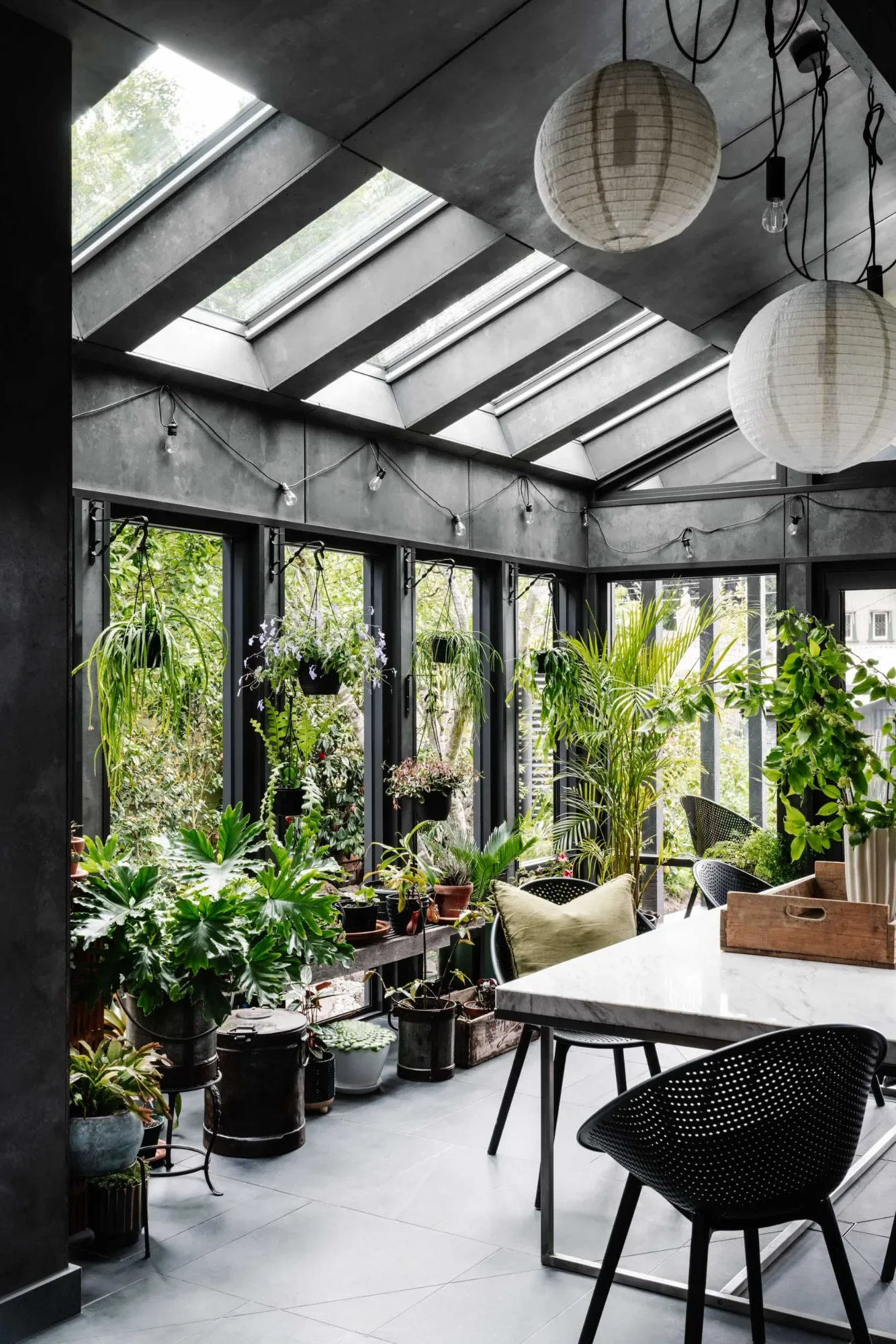
If a client switches off at the word habitat, calling it biophilic design can be what gets the biodiversity outcome over the line.
03 Find out what's already there
Before anyone designs anything, it's worth knowing what already lives on the site.
On a lot of sites the most valuable habitat is already standing. A eucalypt can take more than a century to form the hollows that owls, gliders and parrots nest in, and a nest box is a stand-in rather than a replacement. That makes keeping those trees, and designing around them, one of the cheapest biodiversity decisions a project can make.
Then there's measuring what you can't see. There are now some really accessible tools that make this quite easy. Acoustic recorders will pick up birds, frogs and bats. Camera traps catch whatever wanders through at night, which on a lot of sites is more than anyone expected. Environmental DNA (eDNA), where a soil or water sample gets tested in a lab, can turn up species nobody has actually seen.
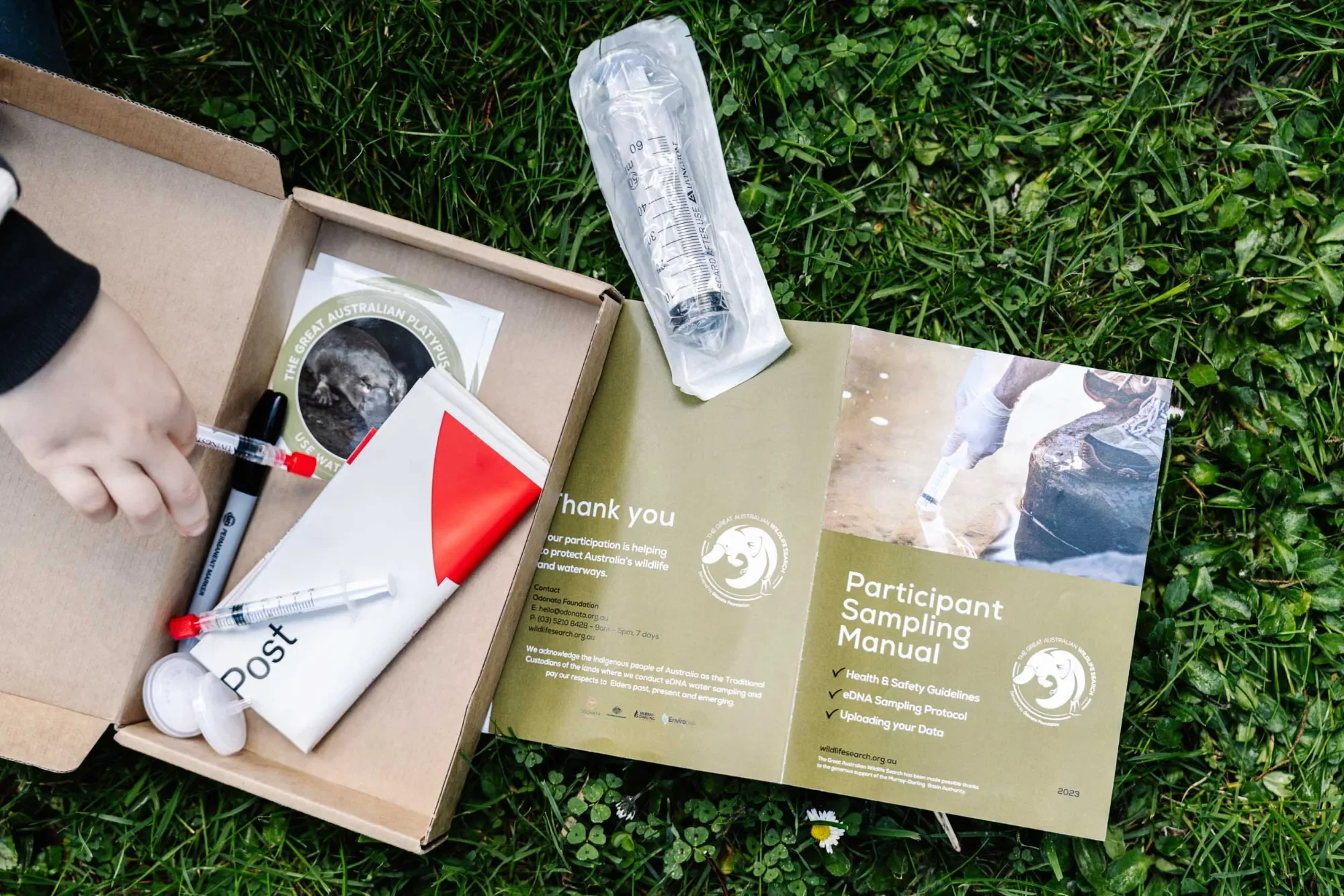
If the client is a family, this stage can even become something the kids get involved in – collecting the samples and seeing what turns up. And if the client is a business, it can be a great way to get staff engaged and curious about the wildlife already using the site.
04 Bring the client with you
Getting a client to agree to Biodiversity Sensitive Urban Design principles generally falls over on budget. But if these choices are made at the design stage, a lot of them can be pretty close to cost-neutral. Take wildlife-sensitive lighting. Replacing fittings that are already installed costs money, but choosing warmer, shielded fittings before anything has been bought can cost about the same. So the earlier you get the client on board, the better the chance these principles make it into the build.
How you raise it depends a lot on who's paying. Commercial and government clients are increasingly being asked about nature in tenders, procurement and environmental, social and governance (ESG) reporting, so for them it's an edge, and showing you're already thinking about it can help win the work. Homeowners are more likely to respond to something they love. If you ask whether they have a favourite bird, plant or place, that one thing sometimes becomes the starting point for the design. One of my favourite examples is a house where a green roof was designed around a single species, the threatened Eltham copper butterfly (a neighbour breeds them), with raised wicking beds of indigenous plants that keep the habitat out of reach of foxes, cats and rabbits.
And if someone else is paying for part of it, it's a much easier yes. The City of Melbourne's Urban Forest Fund has been matching private money for green roofs, green walls and biodiversity planting since 2017, and it's worth checking whether your own council runs something similar.
Then there's the library. Most practices have a materials library, but I’m yet to come across one that has a biodiversity library. If clients can't see it, they can't imagine it, so it helps to present a small, inspiring suite of biodiversity options during the design phase, things like habitat integration, wildlife-friendly lighting, bee bricks, green roofs or bird-safe glazing. When clients can see the possibilities, the conversation becomes much easier. Ideally, a practice develops its own biodiversity playbook, a simple visual library of ideas it can bring into early design conversations.
“If clients can't see it, they can't imagine it.”
That's what I build for design and landscape businesses through the Biodiversity Toolkit for exactly this reason, and to help them win tenders. It's a library of design actions, each with the products, numbers and standards to specify it in Australia.
05 Design out the threats
Some of the simplest wins take a problem away.
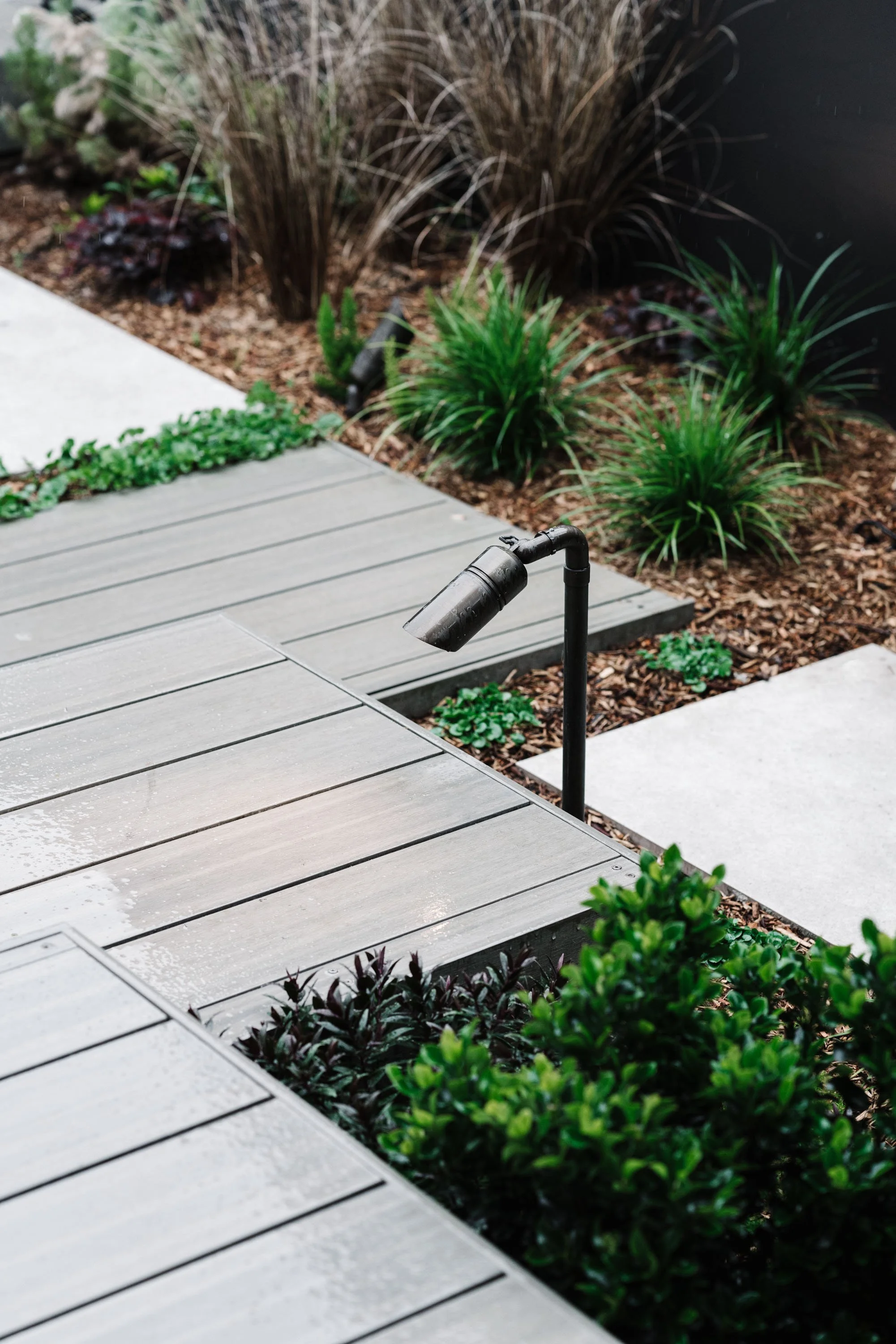
Lighting. Outdoor lighting is one of the cheapest tweaks going and one of the least specified. Bright white light spilling upwards throws bats, moths and migrating birds. If the lighting is warm (a colour temperature of around 2700K or below), shielded, pointed down and on sensors, a lot of that problem goes away, and people still get the same light levels. Australia has national light pollution guidelines for wildlife, and DarkSky certification is the next level up if a project wants to go further. I've already written this one up as one of the entries in the Biodiversity Toolkit, with the colour temperatures, the fittings and where it fits in Green Star, and it's free. Get the wildlife-friendly lighting guide here
Glazing. We don't have a national bird collision figure in Australia yet, but the US estimate runs up to a billion birds a year, and around 44% of those happen at houses rather than towers. Patterned or etched glass, external films and decals all make glass visible to birds. The Australian market is still thin, but it's moving. A lot of the projects I photograph use high-performance windows, so I've been asking those manufacturers what they're doing to prevent bird collisions. I know which companies have something now, who's working on it and who has nothing. If you want names before your next spec, shoot me an email.
Cats. Pet cats in Australia are estimated to kill around 390 million animals a year. A catio, a screened courtyard or cat-proof fencing keeps a cat contained while it still gets to be outside, and once a client sees a well-designed catio, it stops feeling like a restriction and starts feeling like an extra room.
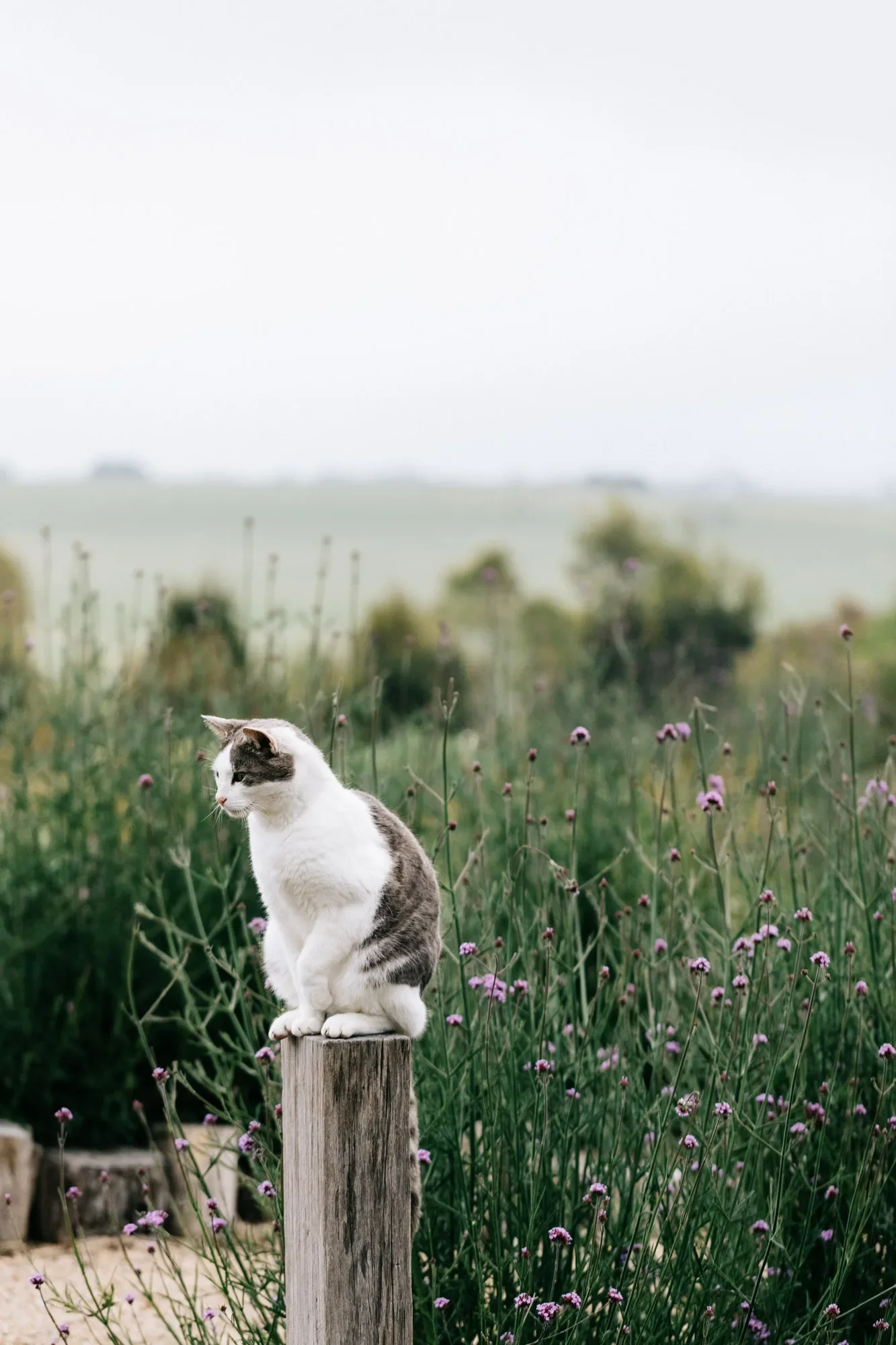
Balconies. This one hasn't been solved yet. Wildlife carers in Melbourne are rescuing grey-headed flying foxes trapped on high-rise balconies, because once one lands behind a solid wall or a glass balustrade it can't take off again (they need a drop to get airborne). If you design apartments, I'd love to see someone crack it.
06 Design habitat in
Nest boxes and hollows. Where the old hollow-bearing trees are gone, a nest box or a hollow carved into a living tree is the next best thing. Which species, which box, where it goes and how high is where a lot of them go wrong. Through Wild Houses I work with the conservation groups who put them up and the people who make the boxes, so if you'd like to know which box suits which animal (and who makes a good one), ask me.
Green roofs and walls. They're one of the simplest ways to turn a built surface into habitat, and they insulate the building and slow the stormwater while they're at it. The plant list decides whether it's habitat or decoration, and a varied mix of local indigenous plants generally supports more native insects than a roof planted in one or two exotic species.
Habitat in the walls. Bird, bat and bee bricks are small cavities built into a wall for nesting, and they're increasingly common in the UK. There's not much available in Australia yet, so they're one to watch. Biodiversity doesn't always need land. Sometimes it just needs a wall. I've been talking to a brick manufacturer who's willing to run a trial if we find the right build, so if you've got a client who'd be up for testing one, ask me.
Native bees. Australia has more than 1,700 species of native bee, and most of them live alone, nesting in burrows in the ground or small hollows in timber. A bee hotel can help, but a lot of the store-bought ones are poorly designed or made from materials that aren't safe for bees, so a homemade one built to the Biodiversity Council's guide is the better bet. And a honeybee hive on the roof isn't the same thing. Honeybees are introduced, and they compete with native pollinators for food.
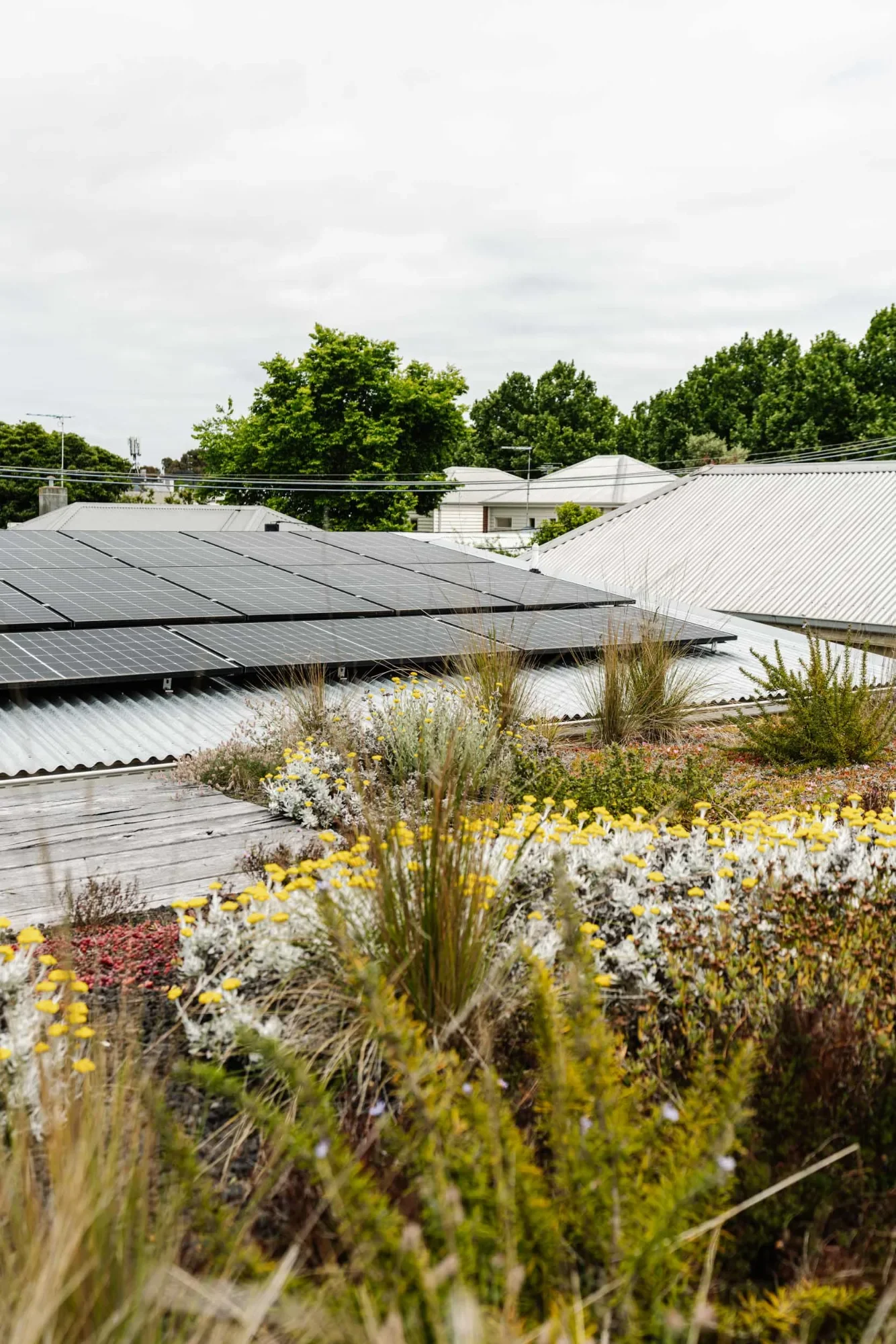
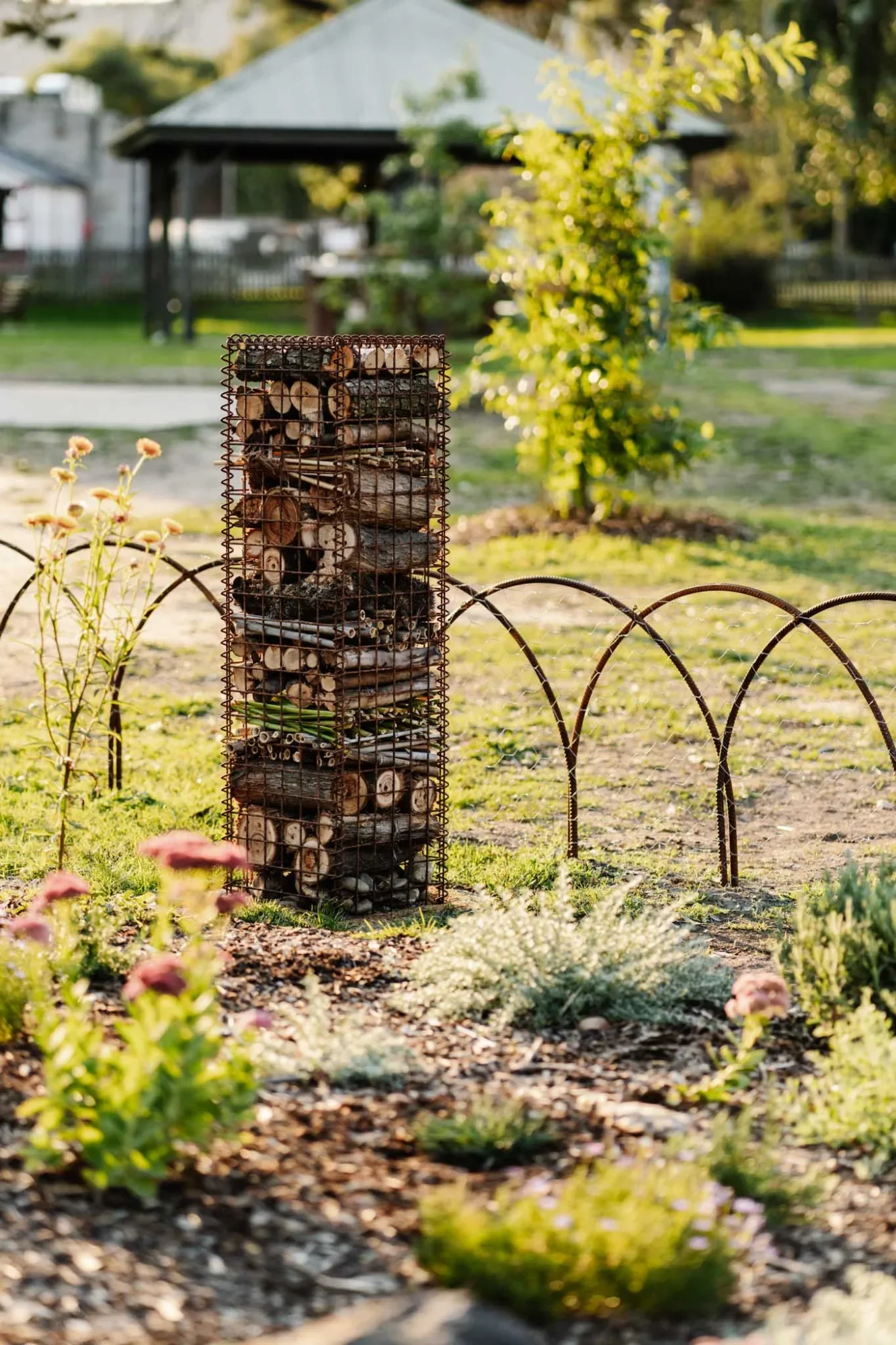
Habitat furniture. Benches, logs and stacked timber give people somewhere to sit and insects and fungi somewhere to live. Vestre in Scandinavia makes a whole range of it. If anyone can convince an Australian manufacturer to do the same, and make it look good, I'd be very happy.
07 Plant for wildlife, and let it move
Most biodiversity happens outside the building envelope, which is where architects and landscape designers meet. If you're the architect, you shape the brief, the space and who's at the table. If you're the landscape designer, the plant list is yours, and it's one of the biggest levers on this whole page.
Local-provenance indigenous species cost a similar amount to exotics or plants without good biodiversity value, and there are more than 100 indigenous nurseries in Victoria alone. The state government keeps a map of them, so there's probably one closer than you think. A garden like that usually needs less water and less maintenance, and it cools the site and manages stormwater at the same time. Rain gardens and a reliable source of water do a lot of work for their size.
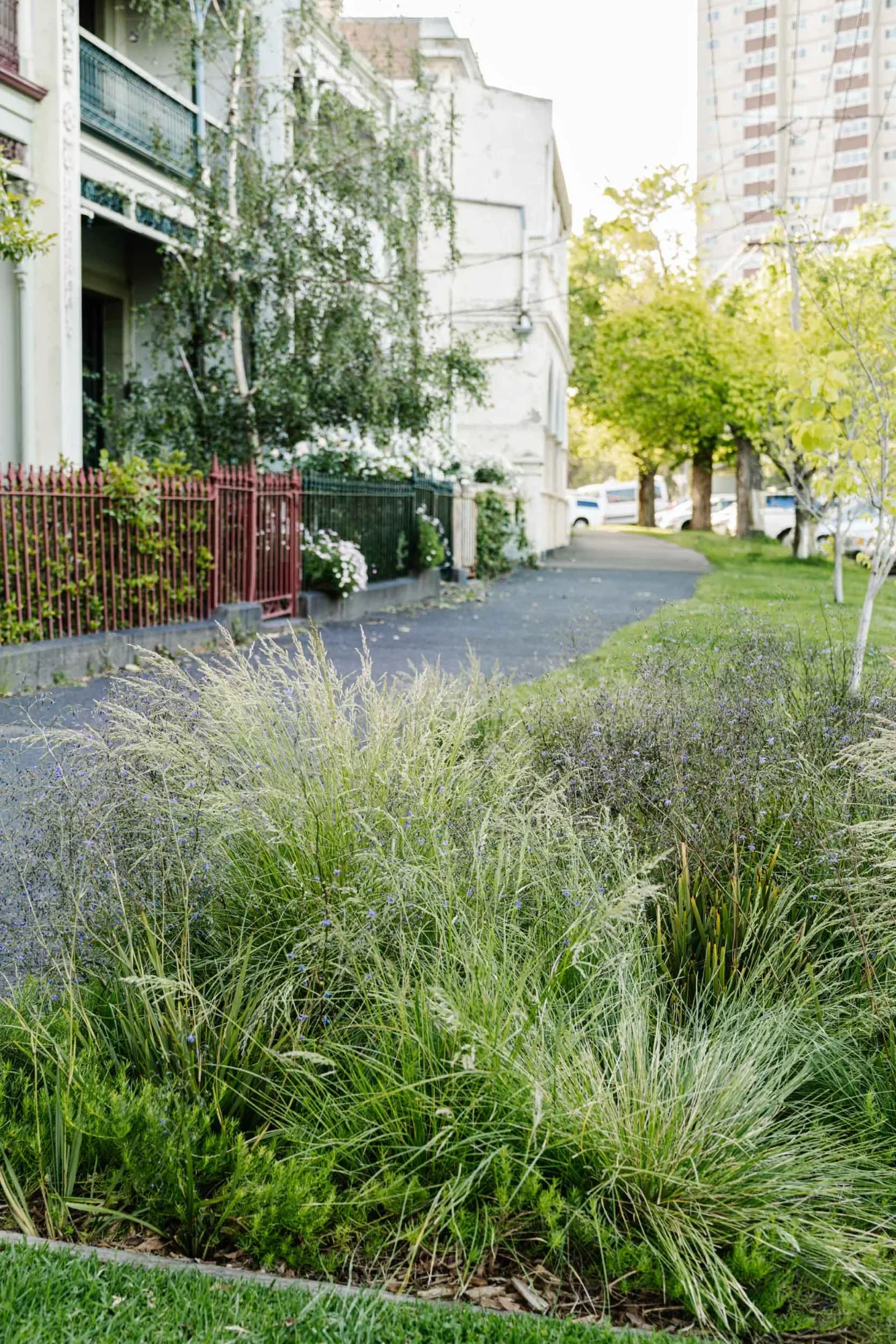
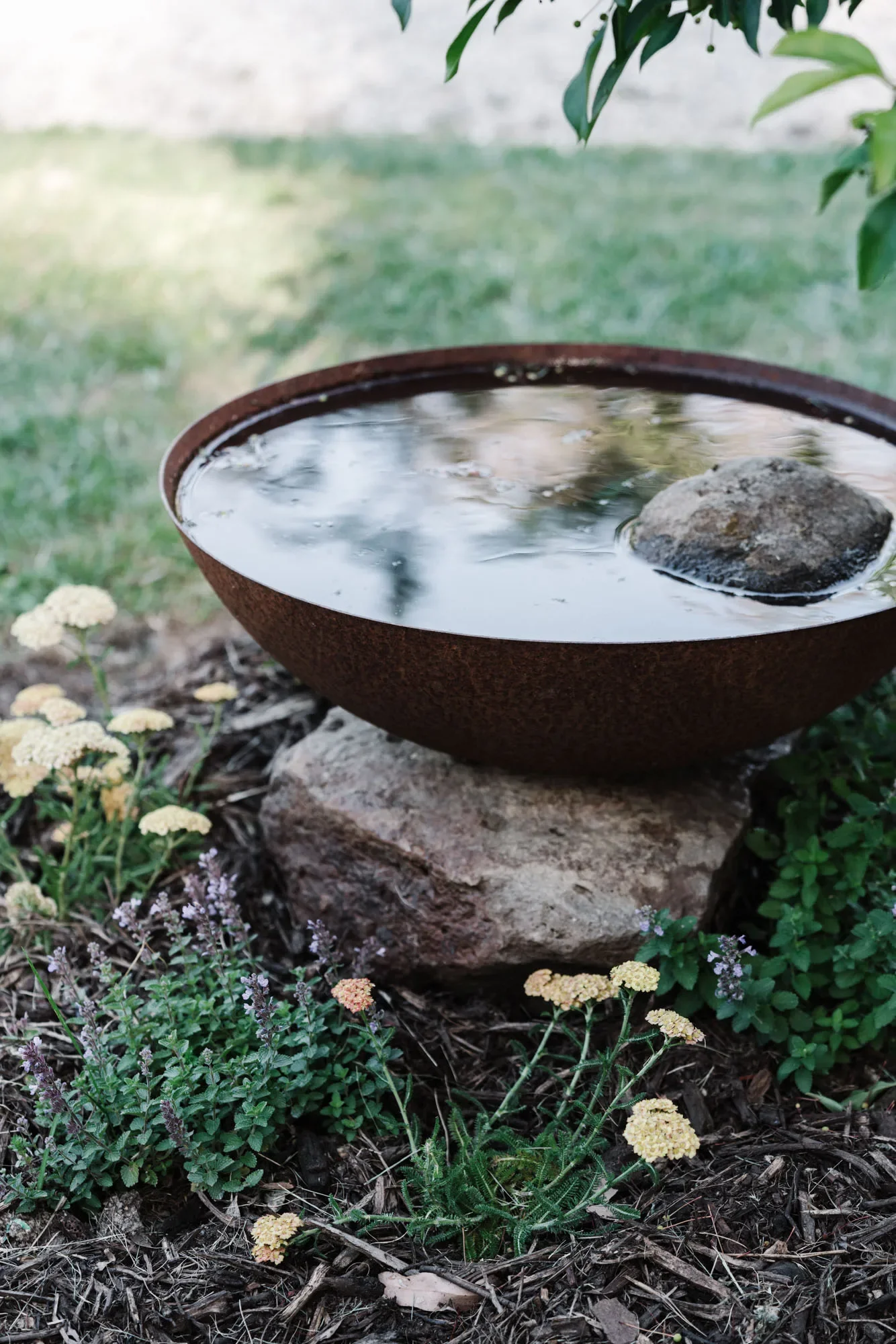
Then there's movement. Habitat only works if wildlife can get in and out, so it's worth looking at what's next door and over the back fence, and whether the site can join up with it. Small gardens add up. Melbourne's Pollinator Corridor aims to link around 200 gardens over 8 km, from Westgate Park to the Royal Botanic Gardens. And there are 22 Gardens for Wildlife programs across Victoria, where a volunteer garden guide visits and gives advice for free, often with a voucher for indigenous plants. It's a neat one to pass on to clients.
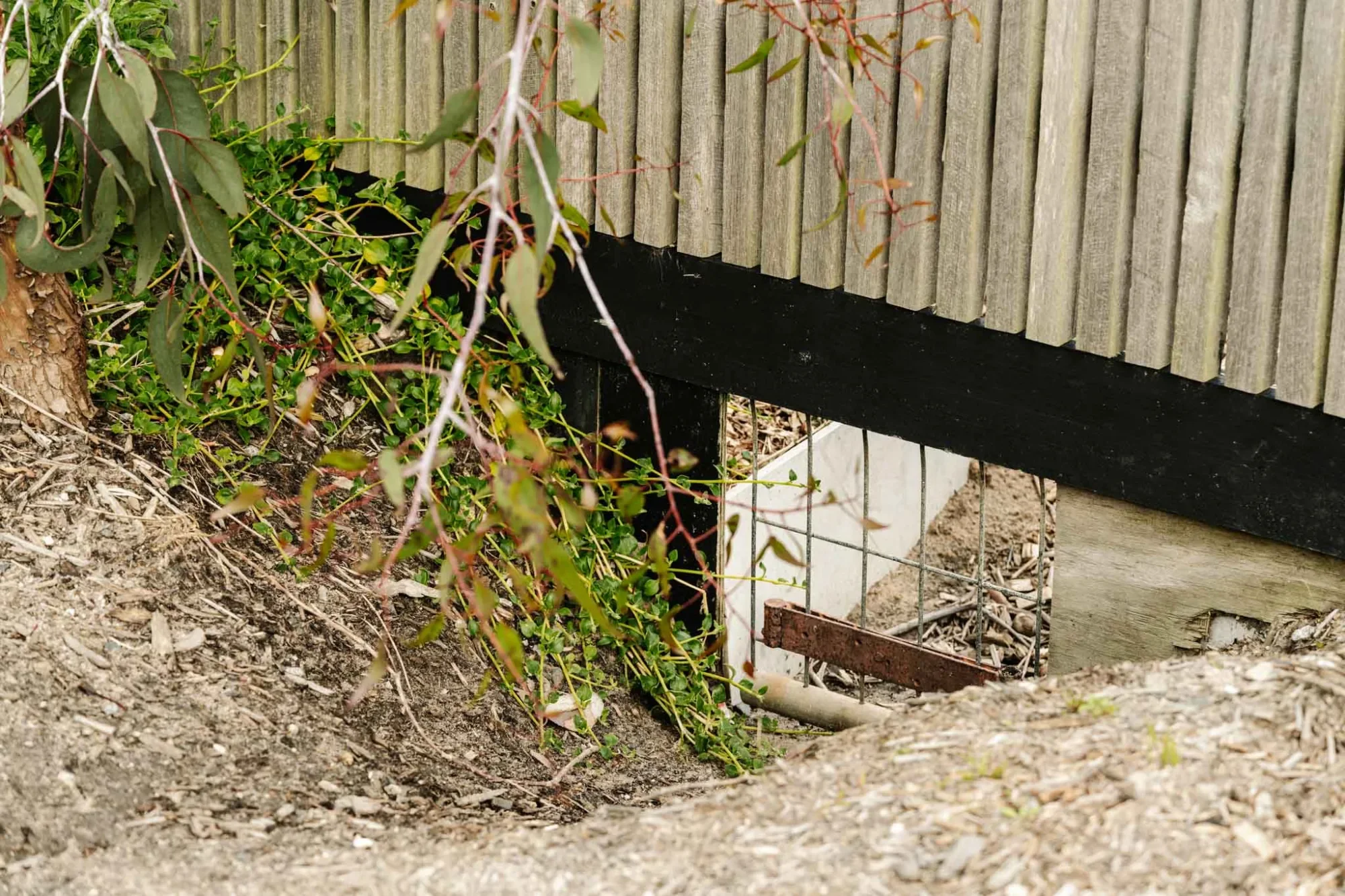
Wombat gates are my favourite example of how small the design choices can be. A little swinging gate at the base of a fence lets a wombat through on its usual path instead of digging under (they're headstrong little beasts), which saves the fence and the ongoing argument between the landowner and the wombat.
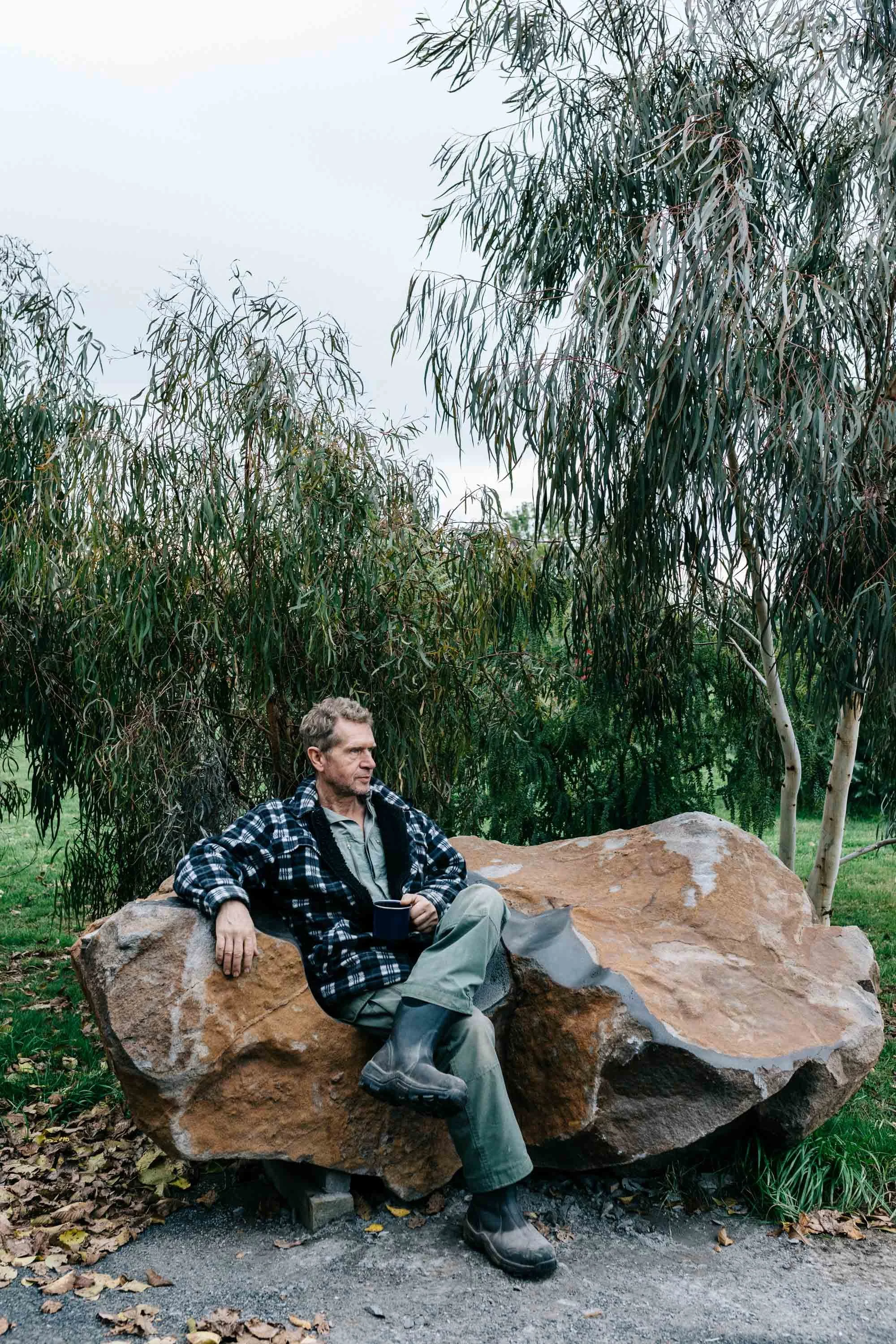
Oh, and it all photographs better, which I realise is a self-interested thing for me to point out.
08 Write it into the spec
Whether or not you control the budget, your drawings and specification shape how a lot of it gets spent. Once cost-cutting starts (what the industry calls value management), whatever you've specified is the starting point everyone has to argue against. You won't win every substitution, but the spec is where you set the bar.
If the environmental intent is written into the spec itself, a substitute has to meet the same criteria and not just the same price. And if habitat items are called up explicitly, with a short note on why each one was chosen, the builder learns something during construction as well.
Then there's who builds it. A builder with real environmental commitments is less likely to downgrade your spec, and there are Certified B Corp builders in Australia now (The Sociable Weaver, MVH Constructions and Hone Built are a few). The same goes for suppliers. If there's timber in the spec, Revival Projects, also a B Corp, mills urban trees that would otherwise be chipped, so it isn't new timber from a forest somewhere else.
09 Try the 3-2-1 check
The 3-2-1 check
If you only take one thing from this, make it this. Start with three things you specify or buy regularly in your business, and see if there's a better alternative that does more for biodiversity. If there is, swap it in. Then look at two spaces you influence, and whether they could fit native planting or a wildlife-friendly feature. Finally, look at an upcoming project, and see if you could add one nature positive element to it. Ten minutes, and you've found six places your practice can do something for nature this year.
What I got wrong
I've built a program for all of this before. There were three versions of it, each more complicated than the last, and by the end I'd made something nobody could use, including me. So I retired it and started again.
The idea was fine. I'd just written a philosophy when what people wanted was a list of things they could put on a spec, so that's what the Biodiversity Toolkit is, and everything above is the short version.
The longer version is always something I'm happy to talk through, so if there's a project on your desk this could help with, email me.
Keep reading
Guide
The habitat list: what to design in, and what to design out
A 10-star home can still clear every bit of habitat on its site.
Checklist
The switch list: what my business runs on
Every business you pay is part of your supply chain, from the bank to the toilet paper. These are the ones mine runs on.
Guide
Choose a cause like you'd choose a client
Carefully, for the long term, and because it fits the work you want to be known for. How to find a giving partner that your team, your clients and your marketing can all get behind.
Checklist
Your biodiversity baseline
One page, seven areas, about five minutes. It shows where your practice sits on nature today, so next year you can tell whether it moved.
NEWSLETTER
JOIN 1,000+ BUILT ENVIRONMENT BUSINESSES
Creating a Regenerative Future.
Three Neat Things, every two weeks - running a business with impact, weaving nature into
projects, and designing places that restore. Quick to read, unapologetically focused on impact.
Plus 30% off your first print when you join.